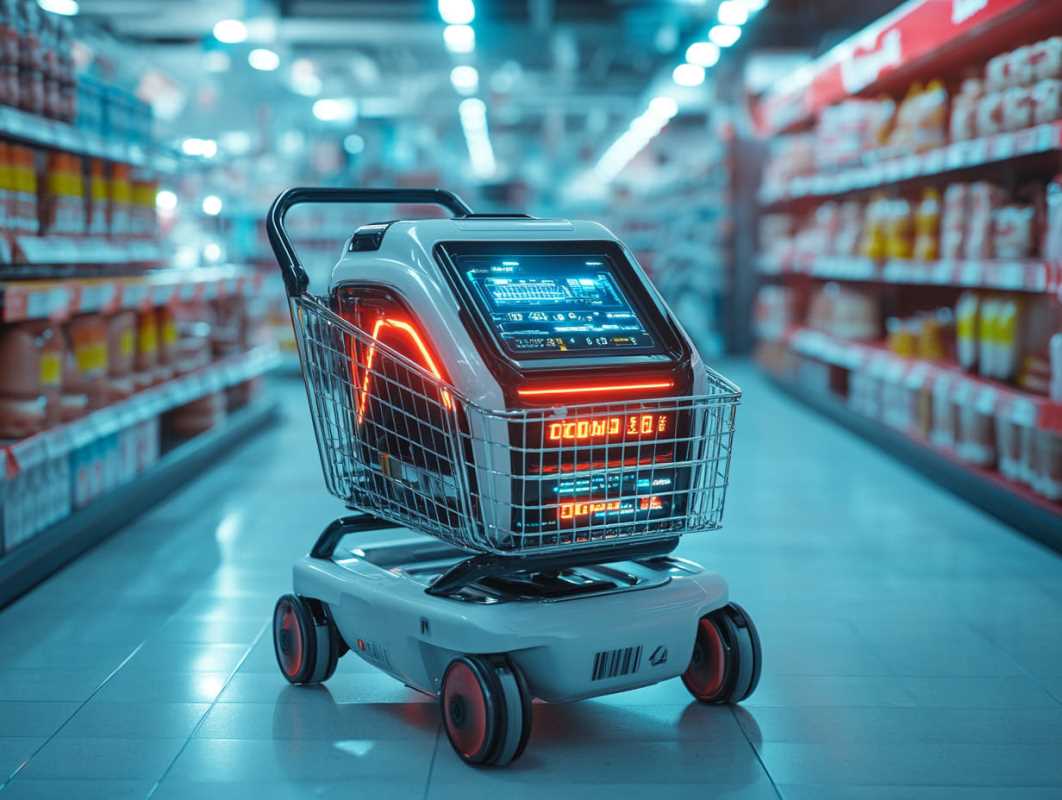
 (Image source: Midjourney)
 Imagine running a lemonade stand. On a hot, sunny Saturday, you can't squeeze lemons fast enough. The line stretches around the block, and your pitcher is constantly empty. But on a rainy Tuesday? You might sell two cups all day. If you bought five crates of lemons for Tuesday, they would sit there and rot. That is money down the drain. This simple problem is exactly what giant companies face every single day, but on a much larger scale. They have to guess how much stuff people will want to buy. When the demand goes up and down without warning, it gets tricky. This is where lean inventory methods come in handy. It’s all about finding that perfect balance so a business doesn't have too much stuff gathering dust or too little stuff to sell to eager customers.
What Exactly is Lean Inventory?
Think of lean inventory like packing for a weekend trip. You don't want to bring your entire closet because your suitcase will be heavy and annoying to carry. But you also don't want to forget your toothbrush or clean socks. You want to bring exactly what you need and nothing more.
In the business world, lean inventory means keeping just enough stock on hand to meet current needs. The goal is to eliminate waste. Waste isn't just trash; it’s anything that doesn't add value. Storing thousands of t-shirts in a warehouse costs money. You have to pay rent for the warehouse, pay people to guard it, and pay for electricity to keep the lights on. If those shirts don't sell, that money is wasted.
The "lean" approach tries to trim the fat. It focuses on efficiency. Instead of ordering a mountain of supplies once a year, a lean business orders smaller amounts more frequently based on what is actually selling right now.
Why Unpredictable Demand makes things Hard
Predicting the future is impossible, even for the smartest computers. Sometimes, a TikTok trend makes a boring product famous overnight. Suddenly, everyone needs a specific brand of water bottle or a certain type of hot sauce. A week later, nobody cares. This is an unpredictable demand cycle.
For a business using traditional methods, this is a nightmare. If they didn't order enough, they run out of stock. When a customer sees "Sold Out," they usually go to a competitor. That is a lost sale. But if the business panics and orders too much, and then the trend dies, they are stuck with a warehouse full of unwanted items.
Unpredictable demand can come from many places:
- Viral Trends: Social media can spike interest instantly.
- Weather: A sudden cold snap boosts coat sales, while a warm winter kills them.
- Economic Shifts: If gas prices go up, people might spend less on luxury items.
- Supply Chain Issues: If a factory shuts down overseas, parts don't arrive on time.
Lean methods help businesses stay flexible enough to handle these wild swings without losing their shirts.
The Just-in-Time (JIT) Approach
One of the most famous lean methods is called Just-in-Time, or JIT. It sounds exactly like what it is. Materials arrive "just in time" to be used or sold.
Picture a car factory. In the old days, they might have had thousands of tires sitting in a giant pile, waiting to be put on cars. With JIT, a truck full of tires shows up at the factory loading dock two hours before those tires are needed on the assembly line.
This method is great for saving space and money on storage. However, it requires excellent relationships with suppliers. If the tire truck gets a flat tire and is late, the whole car factory might have to stop working. That is the risk. But when it works, it is incredibly efficient because the business isn't tying up millions of dollars in parts that are just sitting there.
Safety Stock: The Emergency Fund
You might be thinking, "If JIT is so risky, what happens if something goes wrong?" That is where safety stock comes in. Even lean businesses keep a little bit of extra inventory, just in case.
Think of it like the spare tire in your car. You don't drive on it, and you hope you never need it. But you carry it because getting stranded is worse than the extra weight.
In lean inventory, safety stock is calculated carefully. It isn't a random guess. Businesses look at how much demand usually fluctuates and how long it takes for new supplies to arrive. They keep just enough extra product to cover them during those scary moments when demand spikes unexpectedly or a delivery is late. It’s a buffer, protecting the business from the chaos of the outside world.
Using Data to See the Future
Modern businesses don't use crystal balls; they use data. Lean inventory relies heavily on tracking everything. Every time you scan a barcode at a grocery store, that computer isn't just telling you the price. It’s telling the store's inventory system, "One box of cereal has left the building."
This real-time data allows businesses to react fast. If they see that red sneakers are selling twice as fast as blue sneakers this week, they can immediately order more red ones and stop ordering blue ones.
This is often called "Demand Forecasting," but with a lean twist. Instead of guessing what will happen next year, they look closely at what is happening right now. They use software to spot patterns. Maybe they notice that every time it rains, umbrella sales go up by 300%. The next time the weather forecast predicts rain, the system automatically orders more umbrellas.
Drop-shipping: The Ultimate Lean Method
For some businesses, the best way to manage inventory is to have zero inventory. This is called drop-shipping. It is very popular with online stores.
Here is how it works: You buy a cool lamp from an online store. The store takes your order and your money. But the store doesn't actually have the lamp. Instead, they send your order to the manufacturer or a wholesaler. That manufacturer then ships the lamp directly to your house.
The store never touches the product. They don't need a warehouse. They don't need to worry about the lamp breaking on a shelf. They only buy the item from the supplier after you have already paid for it. This is the leanest possible method because there is zero waste from unsold stock. It is great for unpredictable demand because if nobody buys the lamp, the store owner loses nothing.
ABC Analysis: Prioritizing What Matters
Not all products are created equal. In almost every business, a small number of products bring in the most money. This is often called the "80/20 rule"—80% of your sales come from 20% of your products.
To stay lean, businesses use ABC Analysis to sort their inventory:
- Category A: These are the bestsellers. They are the money-makers. Businesses watch these like a hawk and never want to run out.
- Category B: These are average sellers. They do okay, but they aren't superstars.
- Category C: These are the slow movers. They sit on the shelf for a long time.
By splitting items into these groups, a manager knows where to focus their energy. They might use a strict Just-in-Time method for Category A because those items move fast. For Category C, they might decide to stop stocking them entirely or keep very few on hand. This stops them from wasting time and space on things that people don't really want.
The Vendor-Managed Inventory (VMI) Twist
Sometimes, a business asks its suppliers to do the hard work for them. This is called Vendor-Managed Inventory (VMI).
Imagine if the soda delivery driver was responsible for checking your fridge and refilling it, rather than you having to call and order more soda. The driver shows up, looks at the shelf, sees you are low on cola, and brings more in from the truck. You don't have to calculate anything.
In business, big retailers often do this. A company like Walmart might tell a detergent company, "You can see our sales data. You make sure the shelves are full. If we run out, it's your problem."
This helps the retailer stay lean because they shift the responsibility of inventory management to the supplier. The supplier likes it because they get a guaranteed customer and can plan their own production better. It connects the two companies closely, making the whole supply chain smoother.
Adapting to Change is Key
The biggest takeaway for managing unpredictable demand is flexibility. Lean inventory isn't a strict set of rules written in stone; it is a mindset. It is about being ready to pivot.
When the pandemic hit in 2020, supply chains broke down globally. Companies that were too rigid with their lean methods struggled because they had no safety stock. Companies that were adaptable adjusted quickly. They found new suppliers, changed their product focus, and used data to figure out what the "new normal" looked like.
Being lean doesn't mean starving your business of resources. It means being athletic. An athlete carries no extra weight so they can move fast and change direction instantly. That is what businesses aim for. By using tools like JIT, safety stock buffers, real-time data, and prioritizing their best products, they can ride the waves of unpredictable demand instead of being drowned by them.
All articles published on Thriftier.co are created for informational and editorial purposes only. Readers are encouraged to verify details directly with official job and technology sources before making career decisions. Thriftier.co is not affiliated with, endorsed by, or officially connected to any tech company, brand, or career authority unless explicitly stated.